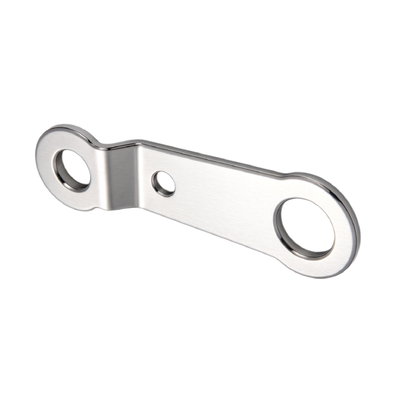
| MOQ: | 10000pcs |
| Standard Packaging: | Wooden crate packaging, moisture and shock resistant, each mold set packed separately |
| Delivery Period: | 25-35 work days |
METS is a professional manufacturer of customized metal stamping parts and precision stamped metal components, providing integrated tooling and stamping solutions for electronics, electrical equipment, automotive, hardware, appliances, industrial machinery, and other applications.
With in-house mold design, stamping die manufacturing, precision stamping, bending, punching, forming, and inspection capabilities, METS supports customers from initial drawing review and tooling development through sample approval and volume production.
Metal stamping is a high-efficiency manufacturing process that uses precision dies and stamping equipment to cut, bend, form, draw, or otherwise shape metal sheet or strip into customized components.
METS combines precision tooling development with metal stamping production, allowing the stamping process to be considered from the earliest stage of product development.
We process a wide range of metals, including stainless steel, carbon steel, aluminum, copper, brass, phosphor bronze, silicon steel, and other specialty alloys, depending on the product requirements.
Every stamping project can be customized according to:
Precision dies and controlled stamping processes help maintain consistent part geometry, critical dimensions, hole locations, and forming characteristics with capabilities down to the micrometer range.
Progressive dies combine multiple operations into a continuous production sequence, integrating punching, blanking, bending, forming, embossing, and other operations into one die for high-volume components.
Support for stainless steel, carbon steel, aluminum, copper, brass, phosphor bronze, silicon steel, and specialty alloys matched to required conductivity, strength, corrosion resistance, and application environment.
Professional stamping dies allow production of parts with multiple bends, small holes, slots, embossed features, tabs, flanges, formed edges, deep-drawn structures, and complex three-dimensional profiles.
Progressive stamping is designed for repeatable, efficient production and can be used for recurring high-volume orders from prototype runs to full production.
Manufacture parts according to customer drawings, samples, CAD models, and technical specifications rather than limiting customers to standard products.
| Parameter | Specification |
|---|---|
| Product Name | Customized Metal Stamping Parts |
| Product Type | Precision Stamped Metal Components |
| Manufacturer | METS |
| Manufacturing Process | Progressive Stamping, Precision Stamping, Punching, Bending, Forming, Deep Drawing |
| Material | Stainless Steel, Carbon Steel, Aluminum, Copper, Brass, Phosphor Bronze, Silicon Steel, Specialty Alloys |
| Material Thickness | Approx. 0.05-6.0 mm depending on material and process |
| Part Size | Customized according to drawing |
| Shape | Round, Square, Flat, Bent, Formed or Custom Geometry |
| Tolerance | According to drawing and component requirements |
| Tooling Type | Progressive Die, Compound Die, Forming Die, Bending Die |
| Surface Treatment | Polishing, Plating, Passivation, Anodizing, Powder Coating, Heat Treatment or Custom |
| Production Volume | Prototype, Small Batch, Medium Volume, Mass Production |
| Inspection | Dimensional, Visual and Functional Inspection |
| Drawing Format | PDF, DWG, DXF, STEP, IGS and Other CAD Formats |
| Customization | OEM / ODM |
| Packaging | PE Bags, Plastic Trays, Cartons, Pallets, Wooden Cases or Custom |
| Application | Electronics, Electrical, Automotive, Appliances, Hardware, Machinery and Industrial Equipment |
Feeds metal strip through a multi-station die with each station performing a specific operation until the finished component is produced. Typical sequence: Punching → Blanking → Bending → Forming → Coining → Cut-Off.
Produces holes, slots, openings, and other cut features with controlled positioning for terminals, brackets, mounting plates, electrical components, and hardware parts.
Transforms flat metal into L-shaped, U-shaped, Z-shaped, channel, or other profiles with consideration for material thickness, bend radius, spring-back, and dimensional requirements.
Creates three-dimensional features such as embossments, ribs, flanges, raised areas, and curved structures.
Suitable for cup-shaped, shell-like, enclosure, and housing components requiring deep forming operations.
Combines several cutting operations into one tooling structure for parts requiring multiple processes in a single stroke.
Xiamen METS Industry & Trade Co., Ltd. specializes in mold design, mold manufacturing, and precision metal stamping production with focus on high-speed precision progressive dies and stamping production for automotive, electronics, LED lighting, lead frames, and stator/rotor laminations.
METS's engineering team designs, constructs, and validates precision stamping dies and tooling systems, coordinating tooling development and stamping production within the same manufacturing system.
Quality consistency is critical for precision stamped components, particularly when parts are used in automated assembly or electrical and electronic applications.
For components with critical dimensions, inspection points and acceptance criteria are agreed upon before mass production.
Precision stamped components for electronic connectors, contact terminals, shielding parts, spring contacts, lead frames, sensor components, switch components, and electronic housings.
Terminal components, conductive contact plates, busbar components, electrical brackets, switchgear hardware, grounding components, and connection terminals.
Automotive brackets, clips, retainers, structural components, electrical terminals, sensor brackets, and motor components.
Internal brackets, fixing plates, structural supports, motor components, electrical contacts, and metal clips.
Machine brackets, equipment housings, structural supports, mounting components, protective covers, and mechanical hardware.
Solar mounting hardware, cable clips, electrical connection components, battery components, and motor-related parts.
Industry: Electronics
Material: Brass / Copper Alloy / Phosphor Bronze
Process: Progressive Stamping + Bending + Forming
Requirement: Consistent dimensions and reliable electrical contact
For small connector terminals, critical features include contact width, terminal pitch, slot geometry, bend position, and contact height. METS develops progressive dies that integrate multiple operations into one production sequence for stable high-volume production.
Industry: Hardware / Electrical Equipment
Material: Stainless Steel
Process: Punching + Bending + Forming
Requirement: Accurate mounting holes and consistent bend geometry
For brackets with multiple holes and bends, tooling and process design are developed around the relationship between hole position, bend position, material thickness, and final assembly dimensions.
Industry: Automotive / Industrial Equipment
Material: Carbon Steel or Stainless Steel
Process: Progressive Stamping
Requirement: High repeatability and production efficiency
For recurring high-volume production, progressive stamping integrates punching, cutting, bending, and forming into a continuous process, reducing manual handling and supporting consistent part-to-part geometry.
Industry: Electrical Equipment
Material: Copper / Brass / Phosphor Bronze
Process: Precision Stamping + Forming + Plating
Requirement: Conductivity, dimensional consistency, and stable contact
Material selection and surface treatment are considered together with stamping geometry. Tin, nickel, silver, gold, or other surface treatments may be evaluated based on application requirements.
A precision stamped component is not simply a piece of metal cut into shape. The performance of the finished part is influenced by: Material → Tooling → Stamping Sequence → Forming → Surface Treatment → Inspection → Assembly
Our engineering team reviews your design for:
Initial samples verify part design, material, forming characteristics, and assembly compatibility.
Dedicated stamping dies designed and manufactured according to approved component specifications.
Trial stamping verifies dimensions, forming, burrs, spring-back, and other critical characteristics.
Qualified tooling and production parameters used for repeatable manufacturing after sample approval.
Production records and tooling maintenance support recurring production requirements.
Customer-specific labels, trays, separators, packaging quantities, and identification methods arranged according to project requirements.
Depending on order quantity and delivery requirements: Express delivery, Air freight, Sea freight, Customer-appointed logistics.
| MOQ: | 10000pcs |
| Standard Packaging: | Wooden crate packaging, moisture and shock resistant, each mold set packed separately |
| Delivery Period: | 25-35 work days |
METS is a professional manufacturer of customized metal stamping parts and precision stamped metal components, providing integrated tooling and stamping solutions for electronics, electrical equipment, automotive, hardware, appliances, industrial machinery, and other applications.
With in-house mold design, stamping die manufacturing, precision stamping, bending, punching, forming, and inspection capabilities, METS supports customers from initial drawing review and tooling development through sample approval and volume production.
Metal stamping is a high-efficiency manufacturing process that uses precision dies and stamping equipment to cut, bend, form, draw, or otherwise shape metal sheet or strip into customized components.
METS combines precision tooling development with metal stamping production, allowing the stamping process to be considered from the earliest stage of product development.
We process a wide range of metals, including stainless steel, carbon steel, aluminum, copper, brass, phosphor bronze, silicon steel, and other specialty alloys, depending on the product requirements.
Every stamping project can be customized according to:
Precision dies and controlled stamping processes help maintain consistent part geometry, critical dimensions, hole locations, and forming characteristics with capabilities down to the micrometer range.
Progressive dies combine multiple operations into a continuous production sequence, integrating punching, blanking, bending, forming, embossing, and other operations into one die for high-volume components.
Support for stainless steel, carbon steel, aluminum, copper, brass, phosphor bronze, silicon steel, and specialty alloys matched to required conductivity, strength, corrosion resistance, and application environment.
Professional stamping dies allow production of parts with multiple bends, small holes, slots, embossed features, tabs, flanges, formed edges, deep-drawn structures, and complex three-dimensional profiles.
Progressive stamping is designed for repeatable, efficient production and can be used for recurring high-volume orders from prototype runs to full production.
Manufacture parts according to customer drawings, samples, CAD models, and technical specifications rather than limiting customers to standard products.
| Parameter | Specification |
|---|---|
| Product Name | Customized Metal Stamping Parts |
| Product Type | Precision Stamped Metal Components |
| Manufacturer | METS |
| Manufacturing Process | Progressive Stamping, Precision Stamping, Punching, Bending, Forming, Deep Drawing |
| Material | Stainless Steel, Carbon Steel, Aluminum, Copper, Brass, Phosphor Bronze, Silicon Steel, Specialty Alloys |
| Material Thickness | Approx. 0.05-6.0 mm depending on material and process |
| Part Size | Customized according to drawing |
| Shape | Round, Square, Flat, Bent, Formed or Custom Geometry |
| Tolerance | According to drawing and component requirements |
| Tooling Type | Progressive Die, Compound Die, Forming Die, Bending Die |
| Surface Treatment | Polishing, Plating, Passivation, Anodizing, Powder Coating, Heat Treatment or Custom |
| Production Volume | Prototype, Small Batch, Medium Volume, Mass Production |
| Inspection | Dimensional, Visual and Functional Inspection |
| Drawing Format | PDF, DWG, DXF, STEP, IGS and Other CAD Formats |
| Customization | OEM / ODM |
| Packaging | PE Bags, Plastic Trays, Cartons, Pallets, Wooden Cases or Custom |
| Application | Electronics, Electrical, Automotive, Appliances, Hardware, Machinery and Industrial Equipment |
Feeds metal strip through a multi-station die with each station performing a specific operation until the finished component is produced. Typical sequence: Punching → Blanking → Bending → Forming → Coining → Cut-Off.
Produces holes, slots, openings, and other cut features with controlled positioning for terminals, brackets, mounting plates, electrical components, and hardware parts.
Transforms flat metal into L-shaped, U-shaped, Z-shaped, channel, or other profiles with consideration for material thickness, bend radius, spring-back, and dimensional requirements.
Creates three-dimensional features such as embossments, ribs, flanges, raised areas, and curved structures.
Suitable for cup-shaped, shell-like, enclosure, and housing components requiring deep forming operations.
Combines several cutting operations into one tooling structure for parts requiring multiple processes in a single stroke.
Xiamen METS Industry & Trade Co., Ltd. specializes in mold design, mold manufacturing, and precision metal stamping production with focus on high-speed precision progressive dies and stamping production for automotive, electronics, LED lighting, lead frames, and stator/rotor laminations.
METS's engineering team designs, constructs, and validates precision stamping dies and tooling systems, coordinating tooling development and stamping production within the same manufacturing system.
Quality consistency is critical for precision stamped components, particularly when parts are used in automated assembly or electrical and electronic applications.
For components with critical dimensions, inspection points and acceptance criteria are agreed upon before mass production.
Precision stamped components for electronic connectors, contact terminals, shielding parts, spring contacts, lead frames, sensor components, switch components, and electronic housings.
Terminal components, conductive contact plates, busbar components, electrical brackets, switchgear hardware, grounding components, and connection terminals.
Automotive brackets, clips, retainers, structural components, electrical terminals, sensor brackets, and motor components.
Internal brackets, fixing plates, structural supports, motor components, electrical contacts, and metal clips.
Machine brackets, equipment housings, structural supports, mounting components, protective covers, and mechanical hardware.
Solar mounting hardware, cable clips, electrical connection components, battery components, and motor-related parts.
Industry: Electronics
Material: Brass / Copper Alloy / Phosphor Bronze
Process: Progressive Stamping + Bending + Forming
Requirement: Consistent dimensions and reliable electrical contact
For small connector terminals, critical features include contact width, terminal pitch, slot geometry, bend position, and contact height. METS develops progressive dies that integrate multiple operations into one production sequence for stable high-volume production.
Industry: Hardware / Electrical Equipment
Material: Stainless Steel
Process: Punching + Bending + Forming
Requirement: Accurate mounting holes and consistent bend geometry
For brackets with multiple holes and bends, tooling and process design are developed around the relationship between hole position, bend position, material thickness, and final assembly dimensions.
Industry: Automotive / Industrial Equipment
Material: Carbon Steel or Stainless Steel
Process: Progressive Stamping
Requirement: High repeatability and production efficiency
For recurring high-volume production, progressive stamping integrates punching, cutting, bending, and forming into a continuous process, reducing manual handling and supporting consistent part-to-part geometry.
Industry: Electrical Equipment
Material: Copper / Brass / Phosphor Bronze
Process: Precision Stamping + Forming + Plating
Requirement: Conductivity, dimensional consistency, and stable contact
Material selection and surface treatment are considered together with stamping geometry. Tin, nickel, silver, gold, or other surface treatments may be evaluated based on application requirements.
A precision stamped component is not simply a piece of metal cut into shape. The performance of the finished part is influenced by: Material → Tooling → Stamping Sequence → Forming → Surface Treatment → Inspection → Assembly
Our engineering team reviews your design for:
Initial samples verify part design, material, forming characteristics, and assembly compatibility.
Dedicated stamping dies designed and manufactured according to approved component specifications.
Trial stamping verifies dimensions, forming, burrs, spring-back, and other critical characteristics.
Qualified tooling and production parameters used for repeatable manufacturing after sample approval.
Production records and tooling maintenance support recurring production requirements.
Customer-specific labels, trays, separators, packaging quantities, and identification methods arranged according to project requirements.
Depending on order quantity and delivery requirements: Express delivery, Air freight, Sea freight, Customer-appointed logistics.