| MOQ: | 10000pcs |
| Standard Packaging: | Wooden crate packaging, moisture and shock resistant, each mold set packed separately |
| Delivery Period: | 25-35 work days |
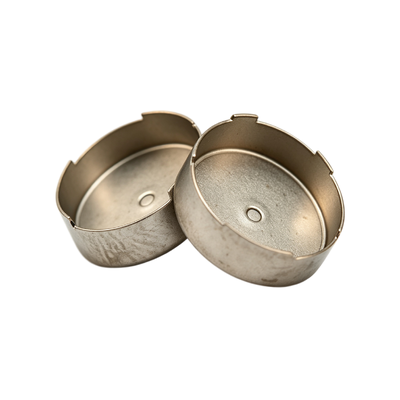
The High-Precision Custom Deep Drawing Die for Electrical Housings is engineered for the precision forming of metal enclosures, protective covers, electrical equipment housings, control box components, sensor housings, and other deep-drawn sheet metal parts.
Designed according to customer drawings, 3D CAD files, samples, and press-machine specifications, the tooling enables controlled material flow during the deep drawing process. This helps maintain consistent wall thickness, dimensional accuracy, corner radii, and overall structural integrity for electrical housing applications.
| Parameter | Specification |
|---|---|
| Product Name | High-Precision Custom Deep Drawing Die |
| Application | Electrical Housings / Metal Enclosures |
| Die Type | Deep Drawing Die / Progressive Deep Drawing Die / Compound Die |
| Forming Process | Deep Drawing / Multi-Stage Drawing / Stamping |
| Secondary Operations | Trimming / Piercing / Punching / Bending / Forming |
| Workpiece Material | Cold Rolled Steel / Stainless Steel / Aluminum / Copper |
| Tool Material | DC53 / SKD11 / D2 / SKH-9 / SKH-51 / YG15 / YG20 |
| Die Precision | Up to approximately 0.003 mm for suitable features |
| Product Tolerance | According to drawing and product structure |
| Material Thickness | Customized according to application |
| Housing Shape | Round / Square / Rectangular / Stepped / Custom |
| Cavity | Single / Multi-Cavity |
| Trial Press | 25-180T, depending on tooling requirements |
| Machining Equipment | CNC / EDM / WEDM / Grinding / Milling |
| Design Software | AutoCAD / SolidWorks / UG / PROE |
| Surface Treatment | Polishing / Coating / Plating / Customized |
| Tool Life | Customized according to material, geometry and production volume |
| First Trial Sample | Available for customer verification |
| OEM / ODM | Supported |
| MOQ | 1 Set |
| Packaging | PE Film + Export Wooden Case |
| Delivery | Approximately 7-35 Days, depending on project |
| Payment | T/T / L/C |
Technical specifications are project-dependent. Final die construction, tolerance, press capacity, material thickness, and tool-life requirements are confirmed during engineering review.
Electrical housings often require a combination of deep walls, small corner radii, mounting features, openings, flanges, embossed structures, and controlled dimensional relationships. Proper die design is therefore essential for stable production.
METS evaluates the following factors during tooling development:
The blank must flow smoothly into the die cavity during drawing. Excessive resistance can cause thinning or cracking, while insufficient control can result in wrinkles or dimensional instability.
For deeper electrical housings, multiple drawing operations can be used instead of forcing the entire depth in a single operation. Multi-stage drawing helps distribute deformation and improve forming stability.
The punch and die radii are optimized according to material type, thickness, housing geometry, and drawing depth to help reduce localized stress.
Appropriate blank-holder pressure helps control material flow and reduce wrinkling while avoiding excessive resistance that could cause material failure.
Proper clearance is important for dimensional accuracy, material flow, tool wear, and final surface quality.
Additional operations such as trimming, piercing, punching, embossing, bending, and flange forming can be incorporated into the tooling solution according to the electrical housing design.
METS is an integrated manufacturer combining die design, precision tooling manufacturing, stamping, deep drawing, and customized metal component production.
DC53 is suitable for demanding stamping and forming applications where improved wear resistance and toughness are required. It can be selected for electrical housing dies requiring stable dimensional performance during repeated production.
SKD11 and D2 are commonly used tool steels for stamping and forming applications. They are suitable for components requiring good wear resistance and dimensional stability.
High-speed tool steels such as SKH-9 and SKH-51 can be considered for high-wear areas or specific cutting and forming components.
Tungsten carbide materials such as YG15 and YG20 can be used for selected high-wear die components according to the forming and production requirements.
The final material selection is determined according to the workpiece material, geometry, production volume, forming load, wear conditions, and required tool life.
METS has tooling experience in stainless steel box and sheet metal forming applications. A progressive deep drawing or forming die can integrate drawing, trimming, and piercing operations to produce a finished enclosure with consistent dimensions.
For lightweight electrical housings, aluminum can be processed through precision deep drawing and progressive tooling. The forming process can be optimized according to aluminum grade, thickness, drawing depth, corner radius, lubrication, and material flow requirements.
METS provides precision stamped and deep-drawn metal shells for sensor applications, with customizable openings, mounting features, and structural details.
METS' deep-drawing tooling can also be applied to cylindrical metal shells and housings. Multi-stage deep drawing is used when the required depth or geometry cannot be efficiently produced in a single drawing operation.
Electrical housings require more than simple sheet metal forming. The tooling must control material flow, dimensional accuracy, wall thickness, corner geometry, and secondary features throughout the forming process.
METS develops customized deep drawing dies around the actual production requirements of the electrical housing. From the initial CAD drawing, engineers can evaluate drawing depth, material thickness, material grade, drawing ratio, corner radius, punch and die clearance, blank-holder requirements, number of drawing stages, trimming requirements, piercing and punching features, press-machine specifications, production volume, and expected tool life.
A properly designed deep drawing die can reduce unnecessary secondary operations and improve production consistency. For electrical housing manufacturers, this can help achieve:
Stable Dimensions → Reliable Assembly → Consistent Forming → Reduced Production Variation
METS supports the complete tooling development process, including design review, machining, assembly, trial production, sample verification, modification, and final delivery.
METS provides customized deep drawing die solutions according to:
METS applies inspection throughout the tooling development process.
METS' published tooling information states that die inserts can be machined to approximately ± 0.002 mm dimensions in suitable applications, while product dimensional tolerances are established according to the customer drawing and product structure.
After final inspection, the deep drawing die is protected against moisture, corrosion, and transportation damage.
The appropriate shipping method can be selected according to tooling dimensions, weight, destination, delivery requirements, and customer preference.
Yes. METS provides customized tooling based on 2D drawings, 3D CAD files, physical samples, or detailed technical specifications.
Typical workpiece materials include cold-rolled steel, stainless steel, aluminum, copper, and other suitable sheet metals. Material selection depends on the electrical housing's strength, corrosion resistance, conductivity, weight, and forming requirements.
Yes. The tooling can be designed for round, cylindrical, square, rectangular, stepped, flanged, and other customized housing geometries.
Yes. Drawing, trimming, punching, piercing, bending, embossing, and other secondary operations can be integrated depending on the product structure.
Yes. The tooling can be designed according to the customer's press specifications, including working area, stroke, tonnage, shut height, and other relevant parameters.
Depending on the application, METS can use DC53, SKD11, D2, SKH-9, SKH-51, YG15, YG20, and other suitable tooling materials.
Precision depends on the feature, material, geometry, machining method, and required tolerance. METS' published deep drawing tooling information specifies high-precision machining down to approximately 0.003 mm for suitable die features.
Yes. Trial stamping can be arranged after tooling assembly so customers can verify dimensions, forming quality, and assembly compatibility before final approval.
The delivery period depends on die complexity, material, size, number of forming stages, and customer requirements. METS product pages commonly specify approximately 7-35 days for customized tooling projects.
Yes. METS integrates die design and manufacturing with stamping production, allowing customers to obtain tooling and customized stamped metal components from the same manufacturing source.
Yes. OEM and ODM services are available for customized electrical housings, deep drawing dies, stamped components, and related metal forming products.
Please provide the 2D/3D drawing or sample, material, material thickness, housing dimensions, annual or estimated production volume, required tolerance, surface treatment, and press-machine specifications if available. Our engineering team can then evaluate the forming process and prepare a tooling quotation.
Whether you need a stainless steel electrical enclosure, aluminum power supply housing, sensor shell, control box, motor-related housing, or other custom metal enclosure, METS can develop the corresponding deep drawing tooling according to your product requirements.
Send us your 2D drawing, 3D CAD file, or physical sample for engineering review and tooling quotation.
METS -- Precision Deep Drawing Die & Metal Stamping Manufacturer
| MOQ: | 10000pcs |
| Standard Packaging: | Wooden crate packaging, moisture and shock resistant, each mold set packed separately |
| Delivery Period: | 25-35 work days |
The High-Precision Custom Deep Drawing Die for Electrical Housings is engineered for the precision forming of metal enclosures, protective covers, electrical equipment housings, control box components, sensor housings, and other deep-drawn sheet metal parts.
Designed according to customer drawings, 3D CAD files, samples, and press-machine specifications, the tooling enables controlled material flow during the deep drawing process. This helps maintain consistent wall thickness, dimensional accuracy, corner radii, and overall structural integrity for electrical housing applications.
| Parameter | Specification |
|---|---|
| Product Name | High-Precision Custom Deep Drawing Die |
| Application | Electrical Housings / Metal Enclosures |
| Die Type | Deep Drawing Die / Progressive Deep Drawing Die / Compound Die |
| Forming Process | Deep Drawing / Multi-Stage Drawing / Stamping |
| Secondary Operations | Trimming / Piercing / Punching / Bending / Forming |
| Workpiece Material | Cold Rolled Steel / Stainless Steel / Aluminum / Copper |
| Tool Material | DC53 / SKD11 / D2 / SKH-9 / SKH-51 / YG15 / YG20 |
| Die Precision | Up to approximately 0.003 mm for suitable features |
| Product Tolerance | According to drawing and product structure |
| Material Thickness | Customized according to application |
| Housing Shape | Round / Square / Rectangular / Stepped / Custom |
| Cavity | Single / Multi-Cavity |
| Trial Press | 25-180T, depending on tooling requirements |
| Machining Equipment | CNC / EDM / WEDM / Grinding / Milling |
| Design Software | AutoCAD / SolidWorks / UG / PROE |
| Surface Treatment | Polishing / Coating / Plating / Customized |
| Tool Life | Customized according to material, geometry and production volume |
| First Trial Sample | Available for customer verification |
| OEM / ODM | Supported |
| MOQ | 1 Set |
| Packaging | PE Film + Export Wooden Case |
| Delivery | Approximately 7-35 Days, depending on project |
| Payment | T/T / L/C |
Technical specifications are project-dependent. Final die construction, tolerance, press capacity, material thickness, and tool-life requirements are confirmed during engineering review.
Electrical housings often require a combination of deep walls, small corner radii, mounting features, openings, flanges, embossed structures, and controlled dimensional relationships. Proper die design is therefore essential for stable production.
METS evaluates the following factors during tooling development:
The blank must flow smoothly into the die cavity during drawing. Excessive resistance can cause thinning or cracking, while insufficient control can result in wrinkles or dimensional instability.
For deeper electrical housings, multiple drawing operations can be used instead of forcing the entire depth in a single operation. Multi-stage drawing helps distribute deformation and improve forming stability.
The punch and die radii are optimized according to material type, thickness, housing geometry, and drawing depth to help reduce localized stress.
Appropriate blank-holder pressure helps control material flow and reduce wrinkling while avoiding excessive resistance that could cause material failure.
Proper clearance is important for dimensional accuracy, material flow, tool wear, and final surface quality.
Additional operations such as trimming, piercing, punching, embossing, bending, and flange forming can be incorporated into the tooling solution according to the electrical housing design.
METS is an integrated manufacturer combining die design, precision tooling manufacturing, stamping, deep drawing, and customized metal component production.
DC53 is suitable for demanding stamping and forming applications where improved wear resistance and toughness are required. It can be selected for electrical housing dies requiring stable dimensional performance during repeated production.
SKD11 and D2 are commonly used tool steels for stamping and forming applications. They are suitable for components requiring good wear resistance and dimensional stability.
High-speed tool steels such as SKH-9 and SKH-51 can be considered for high-wear areas or specific cutting and forming components.
Tungsten carbide materials such as YG15 and YG20 can be used for selected high-wear die components according to the forming and production requirements.
The final material selection is determined according to the workpiece material, geometry, production volume, forming load, wear conditions, and required tool life.
METS has tooling experience in stainless steel box and sheet metal forming applications. A progressive deep drawing or forming die can integrate drawing, trimming, and piercing operations to produce a finished enclosure with consistent dimensions.
For lightweight electrical housings, aluminum can be processed through precision deep drawing and progressive tooling. The forming process can be optimized according to aluminum grade, thickness, drawing depth, corner radius, lubrication, and material flow requirements.
METS provides precision stamped and deep-drawn metal shells for sensor applications, with customizable openings, mounting features, and structural details.
METS' deep-drawing tooling can also be applied to cylindrical metal shells and housings. Multi-stage deep drawing is used when the required depth or geometry cannot be efficiently produced in a single drawing operation.
Electrical housings require more than simple sheet metal forming. The tooling must control material flow, dimensional accuracy, wall thickness, corner geometry, and secondary features throughout the forming process.
METS develops customized deep drawing dies around the actual production requirements of the electrical housing. From the initial CAD drawing, engineers can evaluate drawing depth, material thickness, material grade, drawing ratio, corner radius, punch and die clearance, blank-holder requirements, number of drawing stages, trimming requirements, piercing and punching features, press-machine specifications, production volume, and expected tool life.
A properly designed deep drawing die can reduce unnecessary secondary operations and improve production consistency. For electrical housing manufacturers, this can help achieve:
Stable Dimensions → Reliable Assembly → Consistent Forming → Reduced Production Variation
METS supports the complete tooling development process, including design review, machining, assembly, trial production, sample verification, modification, and final delivery.
METS provides customized deep drawing die solutions according to:
METS applies inspection throughout the tooling development process.
METS' published tooling information states that die inserts can be machined to approximately ± 0.002 mm dimensions in suitable applications, while product dimensional tolerances are established according to the customer drawing and product structure.
After final inspection, the deep drawing die is protected against moisture, corrosion, and transportation damage.
The appropriate shipping method can be selected according to tooling dimensions, weight, destination, delivery requirements, and customer preference.
Yes. METS provides customized tooling based on 2D drawings, 3D CAD files, physical samples, or detailed technical specifications.
Typical workpiece materials include cold-rolled steel, stainless steel, aluminum, copper, and other suitable sheet metals. Material selection depends on the electrical housing's strength, corrosion resistance, conductivity, weight, and forming requirements.
Yes. The tooling can be designed for round, cylindrical, square, rectangular, stepped, flanged, and other customized housing geometries.
Yes. Drawing, trimming, punching, piercing, bending, embossing, and other secondary operations can be integrated depending on the product structure.
Yes. The tooling can be designed according to the customer's press specifications, including working area, stroke, tonnage, shut height, and other relevant parameters.
Depending on the application, METS can use DC53, SKD11, D2, SKH-9, SKH-51, YG15, YG20, and other suitable tooling materials.
Precision depends on the feature, material, geometry, machining method, and required tolerance. METS' published deep drawing tooling information specifies high-precision machining down to approximately 0.003 mm for suitable die features.
Yes. Trial stamping can be arranged after tooling assembly so customers can verify dimensions, forming quality, and assembly compatibility before final approval.
The delivery period depends on die complexity, material, size, number of forming stages, and customer requirements. METS product pages commonly specify approximately 7-35 days for customized tooling projects.
Yes. METS integrates die design and manufacturing with stamping production, allowing customers to obtain tooling and customized stamped metal components from the same manufacturing source.
Yes. OEM and ODM services are available for customized electrical housings, deep drawing dies, stamped components, and related metal forming products.
Please provide the 2D/3D drawing or sample, material, material thickness, housing dimensions, annual or estimated production volume, required tolerance, surface treatment, and press-machine specifications if available. Our engineering team can then evaluate the forming process and prepare a tooling quotation.
Whether you need a stainless steel electrical enclosure, aluminum power supply housing, sensor shell, control box, motor-related housing, or other custom metal enclosure, METS can develop the corresponding deep drawing tooling according to your product requirements.
Send us your 2D drawing, 3D CAD file, or physical sample for engineering review and tooling quotation.
METS -- Precision Deep Drawing Die & Metal Stamping Manufacturer